Winter Travel Medical Kit (2026 Guide): Essential Health Items You Must Bring
Traveling during winter can be magical — snowy streets, festive vibes, hot drinks everywhere, and stunning winter landscapes. But the cold season also brings its own set of health challenges: dry skin, flu, cracked lips, headaches, altitude sickness, and unexpected emergencies.
To keep your trip safe and worry-free, a winter travel medical kit is not optional — it’s essential. This guide explains everything you MUST include, why it matters, and how to pack a compact but fully functional kit suitable for winter destinations like Japan, Korea, Turkey, Georgia, Europe, and the US.
Why a Winter Travel Medical Kit Is Crucial
Cold weather impacts your body differently compared to tropical climates. Winter environments can trigger:
- Dry air → sore throat, cracked lips, nosebleeds
- Temperature shock → flu, cough, fever
- Slippery roads → higher chance of injuries
- Altitude weather changes (e.g., Switzerland, Georgia, US) → dizziness or nausea
- Frozen winds → skin irritation, burns, dehydration
Having the right medical essentials prevents small problems from becoming costly hospital visits abroad.
1. Pain & Fever Medication
Colder countries can cause sudden headaches due to temperature changes and dry indoor heating. You should pack:
- Paracetamol – for fever and general pain
- Ibuprofen – for inflammation or muscle pain
- Cold & flu tablets – useful during long travel days
Always keep a few tablets in your day bag when sightseeing, especially during outdoor winter activities.
2. Cough, Sore Throat & Respiratory Care
Winter air is dry, and indoor heaters make it even worse. Tourists often get:
- sore throat
- dry cough
- hoarse voice
- nasal dryness
Pack these items:
- Lozenges (honey or menthol)
- Nasal spray (saline — safe for frequent use)
- Chest rub/balm (Vicks or similar)
- Portable humidifier (USB-powered — optional but extremely helpful)
3. Winter Skincare Essentials (Medical Grade)
Skin issues are the most common winter travel problem. Cold climates can cause:
- severe dryness
- flaky patches
- itchiness
- skin sensitivity
Recommended items:
- Medical-grade moisturizer (CeraVe, Cetaphil)
- Lip balm with SPF (winter sun is strong at high altitudes)
- Hand cream for cracks or redness
- Petroleum jelly for lips, nose area, and minor wounds
4. Motion Sickness Medication
Winter destinations often involve long bus rides, mountain roads, gondolas, cable cars, and ferries.
Pack:
- Dimenhydrinate (motion sickness tablets)
- Ginger candies (natural remedy)
- Sea bands (acupressure wristbands)
5. Altitude Sickness Essentials
If you’re heading to places like:
- Switzerland
- Georgia (Gudauri, Kazbegi)
- Nepal
- Turkey (Cappadocia hot air balloon rides)
- US/Canada ski resorts
You may experience altitude discomfort.
Pack:
- Electrolyte powder
- Altitude sickness pills (if prescribed)
- Hydration tablets
Important: Never take altitude meds without consulting a doctor first.
6. Plasters, Bandages & First Aid Items
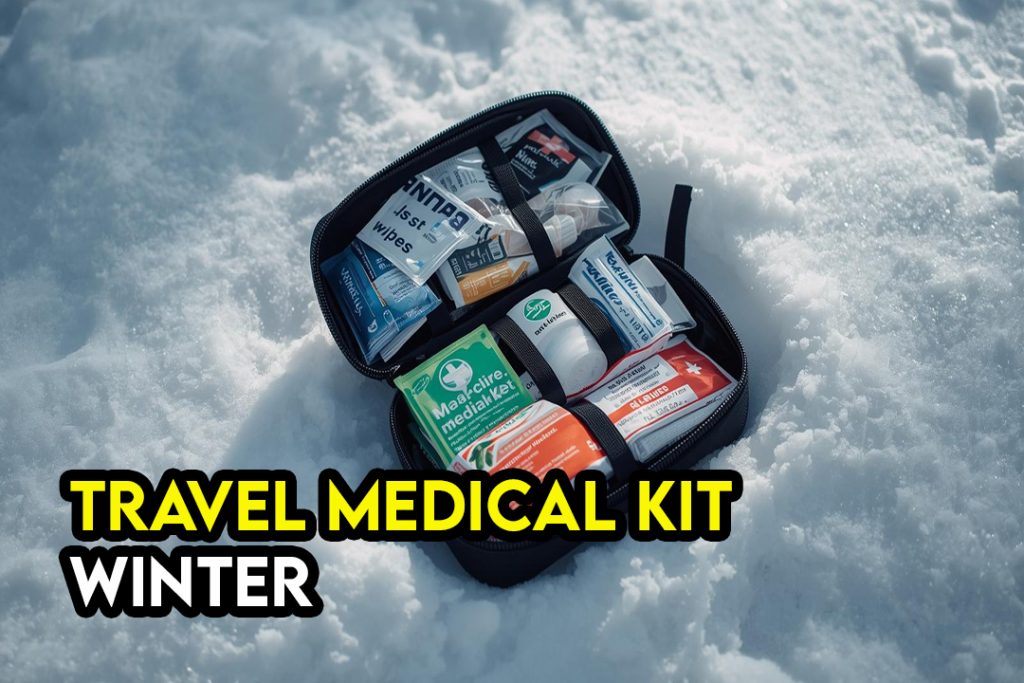
Slippery ice and snow can cause small injuries. A compact first-aid kit should include:
- Adhesive bandages (various sizes)
- Gauze
- Wound disinfectant (alcohol wipes)
- Medical tape
- Elastic bandage (for sprains)
7. Stomach & Food Poisoning Medication
Winter markets and street foods are fun, but they may cause:
- Diarrhea
- Food sensitivities
- Indigestion
Essentials to bring:
- Charcoal tablets
- ORS (oral rehydration salts)
- Probiotics
- Antacids (for gastric issues)
8. Personal Prescriptions
If you are on long-term medication, pack enough for your entire trip — plus extra for emergencies.
Bring:
- Prescription letter (important for airport checks)
- Daily medication organizer
- Digital copy of your prescription
9. Winter Eye Protection
Cold winds can irritate your eyes. Recommended items:
- Eye drops (lubricating type)
- Contact lens solution (travel size)
- Spare contact lenses
10. Emergency Items You Should Not Skip
- Mini hot pack (disposable heat pads)
- Thermal blanket
- Hand warmer
- Mask (protects from cold wind and illness)
- Small thermometer
- Mini torchlight
These items are small but extremely useful during unexpected cold weather situations.
How to Pack Your Winter Medical Kit
Use a waterproof pouch and divide your items into simple categories:
- Everyday items – painkillers, lozenges, lip balm
- Emergency items – bandages, disinfectant
- Weather-related items – moisturizers, heat pads
- Personal medication – prescriptions, chronic meds
Keep your pouch inside your carry-on bag for easy access.
Final Tips for Winter Health Safety
- Stay hydrated even when you don’t feel thirsty.
- Use moisturizer twice a day to prevent cracking.
- Wear layers to avoid sudden temperature shock.
- Avoid walking on icy roads without proper footwear.
- Wash hands regularly to avoid flu infection.
- Keep your medical kit accessible at all times.
A well-prepared medical kit ensures your winter holiday stays magical, safe, and memorable.
Health & Emergency Travel Preparation
Cold-weather travel requires more than warm clothing — it requires proper health preparation. With this complete Winter Travel Medical Kit 2026 Guide, you’ll have all the essential items to stay healthy, comfortable, and ready for any situation during your trip.
Whether you’re exploring snowy Europe, skiing in Japan, or visiting Christmas markets in Korea, this checklist ensures you travel confidently and safely.

First Aid Kit Home Car Camping Hiking
Compact Emergency Supplies Small Bag for Outdoor, Basic Outdoor Essentials Survival Kit.